

Plants growing in containers have it a bit more difficult, since their roots are restricted, pots can dry out quickly and there can be limited nutrients. Compost is usually used in pots instead of soil. You could choose to use:
- peat compost – this is considered to be “soiless”. Peat is formed by decomposed plants from wetland areas. It is unsustainable and a carbon store, so there has been much focus on finding an alternative.
- peat-free compost – can be pretty much anything other than peat, such as coir, composted green waste etc.
- ericaceous compost – specially formulated for acid-loving plants. If you wanted to grow an ericaceous plant but don’t have the soil for it, you could grow it in a pot with specialist soil.
- loam-based compost – sterilized loam with peat and perhaps some horticultural grit added.
- seed compost – a very fine crumb compost, made with sterilized loam, peat and grit. Generally has a low nutrient content since germinating seeds don’t need so much nutrient from the soil.
- potting compost – similar to seed compost, but with more peat and less grit. It also has a higher nutrient amount in it.
- multipurpose compost – for a wide range of uses with added nutrients for a short period (generally 6 weeks or so). Not suitable for ericaceous plants though.
Hydroponics
This is where plants are grown in water, without any soil, although there can be some sort of solid matter for the plants to grow on, like rockwool. The plants are grown in a water-based solution with exactly the right amount of nutrients and oxygen. These methods are generally used commercially with a high level of computerisation and automation.
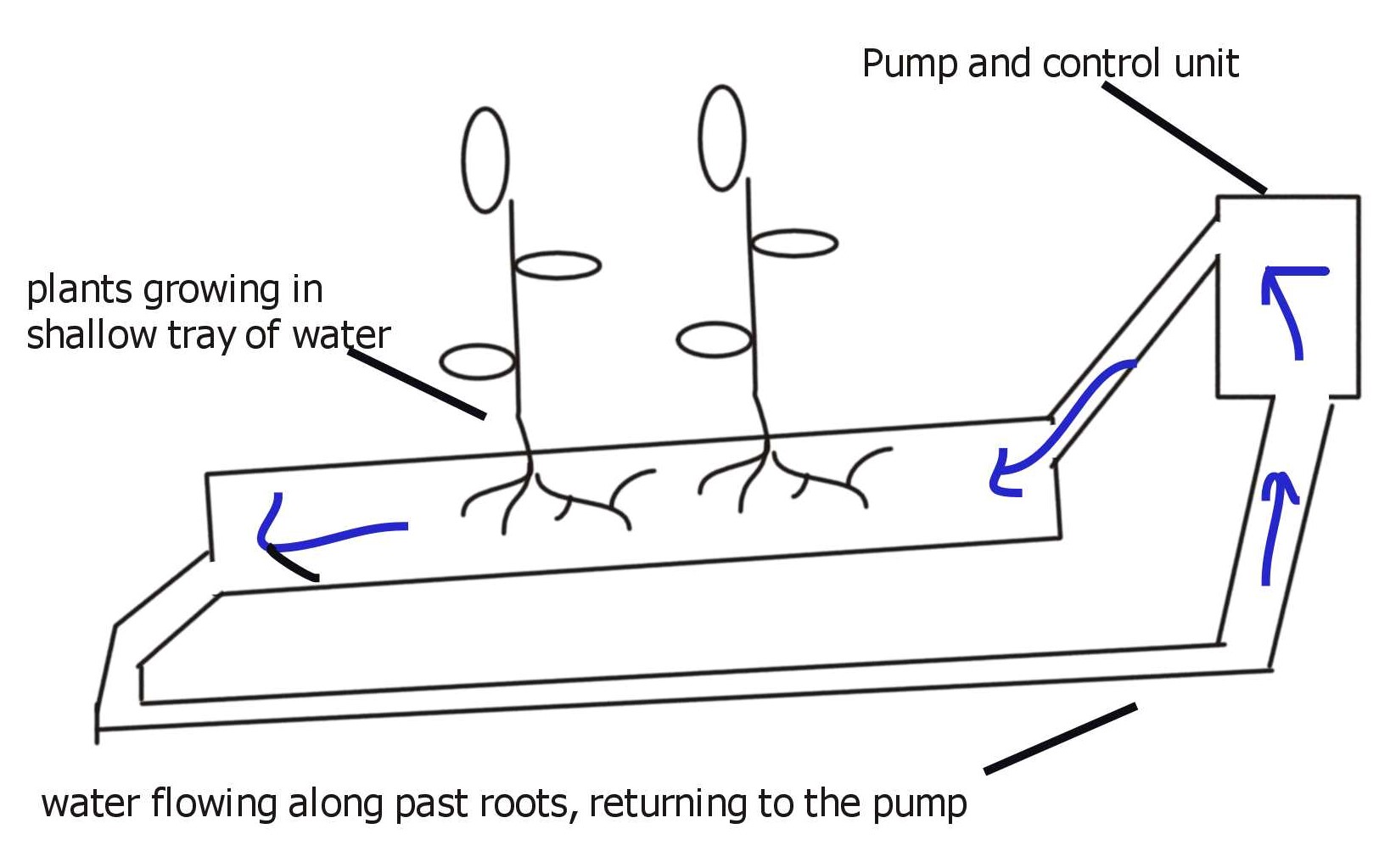
Nutrient Film Technique = a shallow tray is filled with the nutrient water and it flows along the tray. The plants grow with their roots in the shallow tray. The nutrient water is collected at the bottom of the tray, monitored for nutrient level and pH, aerated and then pumped back to the top of the tray to pass along the roots of the plants. This is good for water recycling, but can mean build up of disease in the water.
Substrate culture – similar to nutrient film technique, but the plants are growing in something solid, like vermiculite or rockwool. If it is an open system, the water is just drained away. In a closed system, the water is recycled.
Water culture or hydroponics is used commercially to grow tomatoes, cucumbers and strawberries. It is expensive to begin growing this way and often these centres are built in less populated areas, so there is an environmental impact to transporting the crops to urban areas.
Water culture also features in green walls and also indoor plants in offices and shopping malls.
Ok, that concludes R2102! Please remember to click like if you found this useful, and subscribe for more.
 Gardening studies